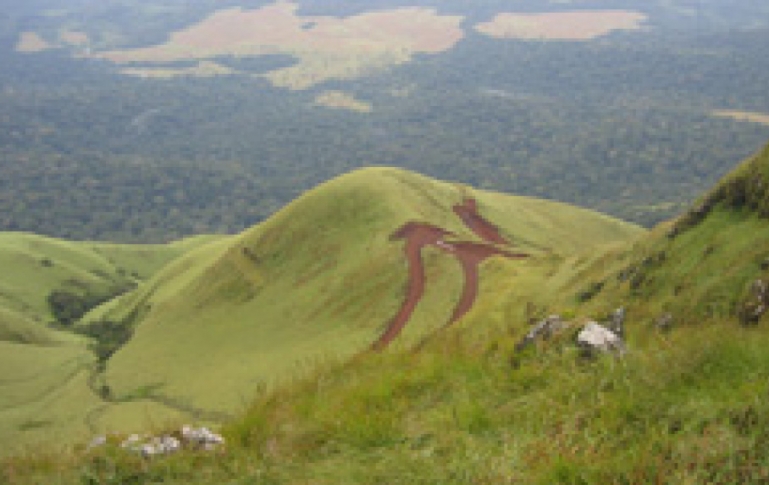
In the south-eastern corner of Guinea, an impressive mountain known as Nimba lies hidden. Owing to its remoteness and steep slopes, the region has been left untouched by human conflict. A large part of the mountain holds rich iron ore deposits, and BHP Billiton, together with the local mining organisation SFMG, holds the rights to extract the ore. A site has been established on the western slopes to house the personnel working on the mining operations. As mains power is not available, diesel generators are an indispensable part of the camp’s day-to-day operation.
Of the set of three 150kVA generators, one supplied power to the site at any given time. The other two were kept on standby or idle until it was time to switch to another set. However, as the site grew, a single set became inadequate for the ever-increasing electrical load. Although the sets were relatively old, each of the engines had run for only around 4500 hours. It was therefore decided to upgrade the existing panel into a synchronisation system using three Deep Sea 5510 controllers.
The floor-mounted panel, designed and manufactured in South Africa, was shipped to Conakry and then transported overland to the Nimba camp. The Sincro alternators were driven by Perkins type 1006 engines. The AVRs had to be replaced with the DBL1 type, which is suitable for parallel operation. Speed control via analogue signal was attempted but was unsuccessful; the wiring was therefore reconfigured for the internal relay speed control system. The 5510 controller thus used analogue voltage control and digital speed control.
After minor adjustments to the gain and stability settings, the sets moved into and out of parallel mode quite effortlessly. During peak power times two sets run together, and at all other times the system reverts to a single set. The power demands have been met.