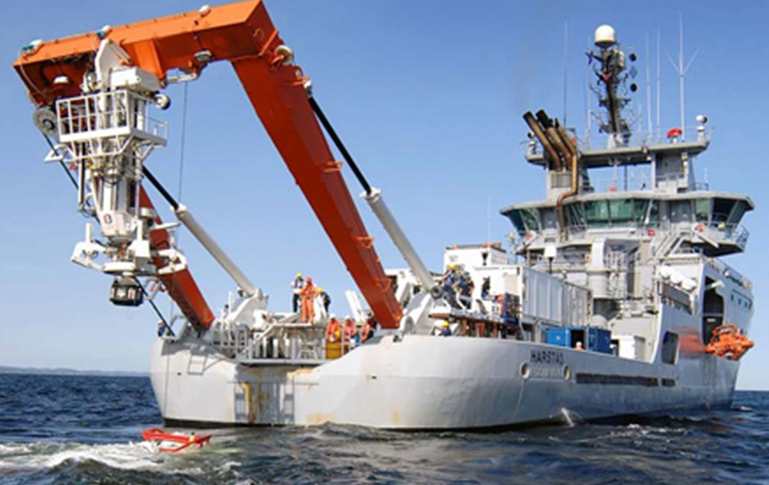
Interpower’s NATO Submarine Rescue System Generating Set represents a radical approach to marine emergency power. The system comprises a class-approved Mitsubishi S6R-MPTA engine, a Mecc Alte ECO40-2L/4 alternator and a Deep Sea Electronics marine control system. Ordered by the Royal Navy from the United Kingdom-based Interpower, the NATO Submarine Rescue System Generating Set is designed primarily to operate as part of the submarine rescue systems of NATO’s British, Norwegian and French Navies.
Design Constraints: To develop this equipment, Interpower had to resolve a number of challenges. Justin Hudson of Interpower explained: “Although we have previously manufactured containers for offshore applications meeting the DNV 2.7-1 Standards, we had never before been subject to size and weight limitations. This unit had to be 6 inches lower than a standard ISO container and had to weigh no more than 13.5 tonnes, including oil, water and fuel.”
High Specification: He continued: “While that may not sound difficult, when you take into account all the equipment that had to be included in the specification and the noise level required of 85 dBA at 1 metre, it was a real challenge.” Justin emphasised: “The container had to include a Lloyds-approved CO2 fire suppression system. When we consulted Lloyds, we discovered that a system with dual CO2 discharge had never before been produced in this type of container. Before manufacturing the system, we had to submit detailed designs and the operating methodology to Lloyds for approval. As part of the overall approval of the set, we had to demonstrate a CO2 discharge and a 30-minute integrity hold test, which we passed successfully.”
Radiator Cooling: Justin explained that radiator cooling was another requirement. “We normally use the ship’s supply to cool the engine via a heat exchanger on marine generators; however, this specification required radiator cooling so that the unit could be run on land and tested for readiness as part of the weekly maintenance schedule.”