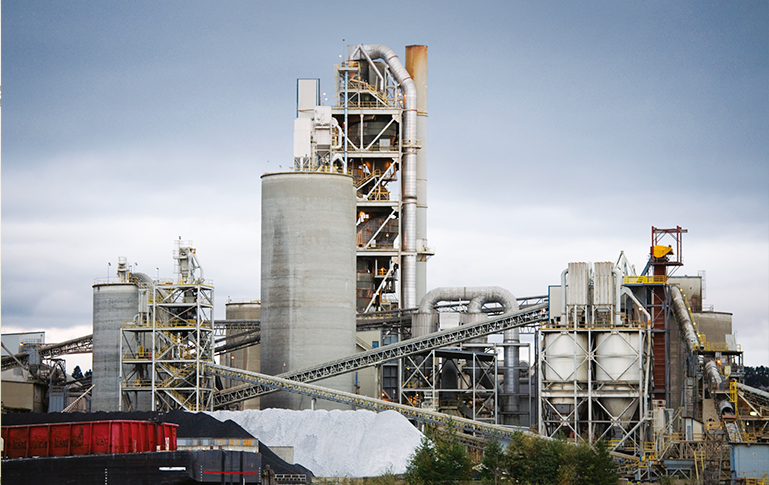
Sierra Leone Cement Corporation Ltd. is the principal cement manufacturer in Sierra Leone, on the west coast of Africa. The plant draws its continuous power from seven generators on site, which provide sufficient electricity for quarry operations, grinding, conveyors, lighting and ancillary equipment. Under a recently planned project, the aim was to replace four of the seven generators, which were beyond economical repair. The United Kingdom-based generating set company International Power Generation Ltd (IPG) won the tender to supply four replacement generating sets and to replace the controls on the remaining three sets.
Four 1750 kW sets with previously used Detroit Diesel engines were sourced from a government building in Livingstone, Scotland. The sets had a low usage history and minimal running hours, which made them ideal replacements for the Sierra Leone project. The sets were serviced and fitted with new DSE synchronisation and load sharing control modules. The sets were configured and tested in the United Kingdom as a four-set, automatic, load-sharing system with a load demand scheme. The load demand scheme ensures that the sets are brought on line in a selected sequence when the load demand reaches predetermined levels.
For example, when the system is started, all four generators start, synchronise and take the load. Each controller monitors the Bus, and a priority order is set by the engineer. If the load is below the selected level (which can be set as a percentage of the generating set capacity), the last generator in the priority order begins its shutdown procedure. If the load continues to fall, the other generating sets shut down according to the priority order. Conversely, if the load increases, the generating sets start, synchronise and share the load, again according to the priority order. This type of load demand scheme ensures that the engines are not run at maximum capacity for long periods, thereby reducing engine stress and contributing to a longer engine life.
Each controller can be set to the level deemed appropriate; for example, 50% – when the load on the generator reaches 50% of the total capacity, the second generator comes on line and shares the load. Changes to the load level settings can easily be carried out via a PC and the user-friendly Windows®-based DSE software. Changes to the priority order and other parameter settings can be made in the same way. Once complete, the system was fully tested with a load bank at the IPG workshop prior to dispatch. IPG’s engineers were extremely satisfied with the system’s performance. The system was then delivered to Sierra Leone and installed with great success.